

Interview with a Football Expert: Insights and Predictions for Upcoming Matches

Football predictions are most useful when they explain why a result may happen. In this interview, a football expert discusses team form, tactical analysis, player performance, injury and squad updates, and the details that can shape upcoming fixtures. The views below are informed opinions rather than guaranteed outcomes, giving fans a clearer framework for watching the next round of matches.
Meet the Football Expert
A football expert combines match observation, tactical knowledge, team news, and careful comparison of recent performances to form a reasoned view. Our interviewee approaches football analysis as a process of testing evidence rather than predicting from reputation alone.
Q: What is your approach to analysing a match?
A: I begin with the basic context: the competition, the upcoming fixture, venue, schedule, and what each team needs from the match. Then I examine recent results, chance creation, defensive errors, pressing behaviour, set pieces, and likely line-ups. A 3–0 result can hide a difficult performance, while a narrow defeat may reveal a team that created enough chances to win.
The expert also separates confirmed information from interpretation. An injury reported by the club or a verified team update belongs in the first category. An assumption about a player’s availability, a possible tactical switch, or a predicted substitution remains uncertain until official team news appears.
Q: Which areas do you focus on most?
A: I look for the relationship between styles. A possession-heavy team may struggle against a compact side that attacks the space behind its full-backs. Likewise, a direct team can lose its threat if the opponent wins second balls in midfield. Those interactions usually tell us more than a simple league-table comparison.
The Biggest Football Talking Points Right Now
Current football discussion is shaped by tactical flexibility, uneven team performances, the league title race, and the rapid development of emerging players. Football news should be read alongside match evidence because headlines often simplify complicated trends.
Q: What is attracting your attention across the game?
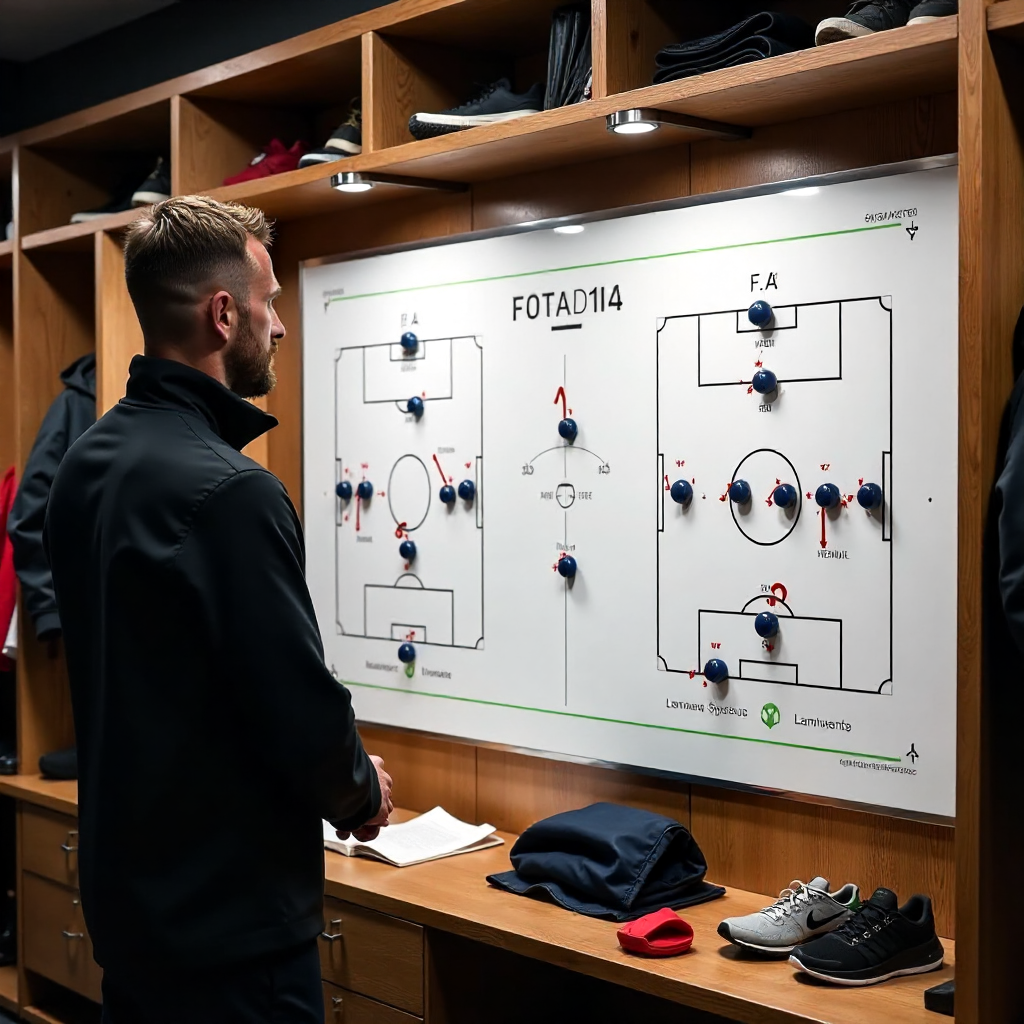
A: The strongest teams are becoming more fluid in possession. A nominal full-back may move into midfield, a winger may occupy the central channel, and a striker may drop deep to create space for a runner. These rotations can improve build-up play, but they also leave areas exposed when possession is lost.
The league title race is another major narrative. A leading team may have the best attacking numbers, yet a crowded schedule can test its squad depth. Chasing teams often benefit from having fewer distractions, while a side defending first place must manage pressure, travel, and injuries across several competitions.
Emerging players are influencing matches earlier in their careers. Young midfielders are increasingly trusted to press, receive under pressure, and progress the ball. Their impact should still be judged over a meaningful run of games. One impressive appearance can signal potential, but it does not remove the need for patience.
There is also a growing emphasis on rest defence: the structure a team keeps behind the ball while attacking. It is a less glamorous phrase than goals and assists, but it often determines whether a dominant side controls counterattacks or concedes easy chances.
How Team Form and Tactics Shape Match Predictions
Team form shapes match predictions when recent results are combined with performance quality, tactical matchups, home advantage, and available personnel. The most reliable assessment asks whether a trend is repeatable rather than simply counting wins and losses.
A practical way to assess a fixture is the FORM filter: Forward threat, Opponent quality, Response after setbacks, and Match conditions. This framework keeps analysis broad enough for general fans while avoiding a dependence on one statistic.
- Forward threat: Consider shots, movement in the penalty area, chance quality, and whether key attackers are finding space.
- Opponent quality: A run against lower-ranked teams may look impressive but offer less evidence than performances against strong opposition.
- Response after setbacks: Watch how a team reacts after conceding, losing a lead, or facing a red card.
- Match conditions: Home advantage, travel, weather, pitch conditions, and fixture congestion can all affect intensity.
Q: How much should fans trust recent form?
A: Recent form matters, but context matters more. A team winning four matches by narrow margins may be less convincing than a team with two wins, one draw, and one defeat that consistently creates superior chances. I also compare formations. A coach may use a conservative shape away from home and a more aggressive system at home, so results from different settings are not perfectly comparable.
Home advantage can influence territory, officiating pressure, familiarity, and emotional energy. It is not an automatic winning factor. Choosing a home team because of the venue alone means ignoring tactical weaknesses, fatigue, and squad changes.
Expert Predictions for Upcoming Fixtures
Expert match predictions should describe the most plausible outcome while identifying the conditions that could change it. A sensible forecast includes a result lean, tactical reason, key battle, and warning against excessive certainty.
Q: What are your broad predictions for the upcoming fixtures?
A: In a fixture between a high-possession team and a disciplined counterattacking side, I would lean toward a narrow home win or draw if the hosts protect their rest-defence structure. The key battle is usually the space beside the home team’s central midfielders. If the visitors can receive there and release runners early, the match becomes much more open.
For a meeting between two closely matched teams, a draw is often the most responsible prediction when neither side has a clear advantage in pressing resistance or penalty-area quality. Set pieces may become decisive, particularly if both teams struggle to create from open play.
When a high-scoring attack faces a defence missing an established centre-back, the attacking side gains an important advantage. That does not guarantee a comfortable result. A replacement defender may be quicker, the midfield may protect the back line better, or the leading attack may struggle against a low block.
Prediction takeaway: Expect close margins in tactically balanced fixtures. The first goal, the quality of transitions, and late injury news can matter more than a team’s overall reputation.
Fans should also update their view after the official line-ups are announced. A prediction made 24 hours before kick-off is based on probable selections; a prediction made after confirmed team news has stronger evidence. Neither is certain, because football contains random events that no model or analyst can fully remove.
Players Who Could Make the Difference
Influential players can change a match through finishing, ball progression, defensive positioning, or goalkeeping, but their impact depends on the system around them. Injury, suspension, fatigue, and selection decisions can quickly alter a pre-match assessment.
Q: Which player profiles should fans watch?
A: Start with the forwards who attack the space behind the defence. Their movement may stretch a back four even when they do not score. Then watch the midfielders who receive under pressure. If they turn and progress the ball, their team can escape the press and create attacks with numerical advantages.
At the back, an experienced centre-back can control the defensive line and reduce dangerous transitions. Full-backs may be equally important when they decide whether to overlap or remain deeper. Goalkeepers deserve special attention too: their distribution can bypass pressure, while their positioning may prevent a promising attack from becoming a clear chance.
Player performance should be judged beyond headline statistics. A winger who creates space for teammates, a midfielder who covers passing lanes, or a defender who wins crucial aerial contests may have a major influence without appearing on the scoresheet.
Before watching, check the latest injury and squad updates, suspension news, rotation risk, and official starting line-ups. A missing holding midfielder can affect a team more than the absence of a widely discussed attacker if the replacement changes the entire balance of the formation.

How Fans Can Follow the Action
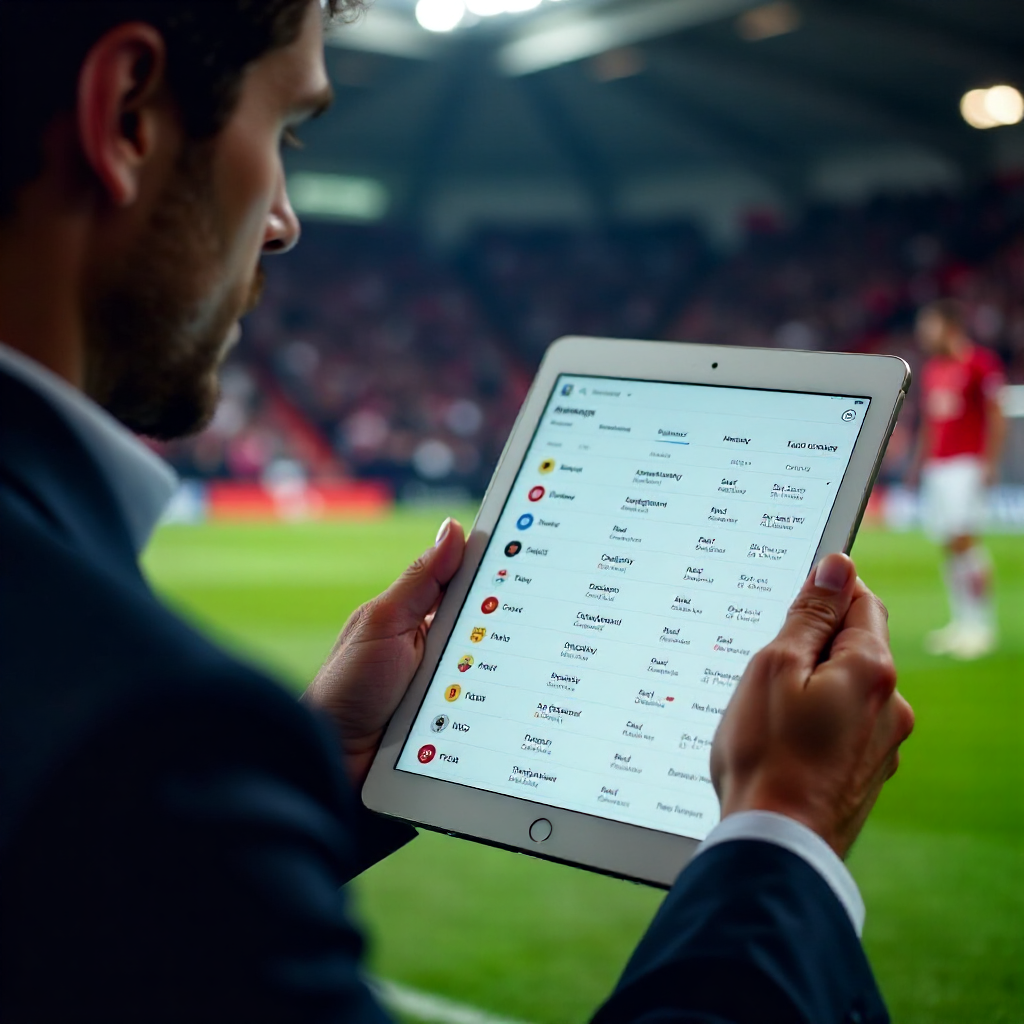
Fans can follow matches more intelligently by combining official fixture information, reliable football news, live football streams from legitimate providers, and real-time team updates. Checking the source and the competition’s broadcast rights helps avoid misleading or unsafe coverage.
Before kick-off, confirm the date, start time, venue, competition, and broadcaster. Official league, club, and broadcaster websites are useful starting points because fixture schedules can change after television selections, cup commitments, or adverse conditions.
During a match, live commentary, verified team accounts, reputable sports desks, and licensed live football streams can complement what happens on screen. Avoid websites that promise every match for free while requesting unusual downloads, payment details, or extensive personal information. Unauthorised streams can also disappear without warning and may expose viewers to security risks.
A useful viewing routine has three stages:
- Before the match: Review team form, tactical expectations, confirmed absences, and likely formations.
- During the match: Watch pressing triggers, the location of turnovers, set-piece organisation, and how each side responds to the first goal.
- After the match: Compare the prediction with the actual performance, not only the final score.
For competition rules, team information, or historical context, readers can cross-check reputable sources such as UEFA and official league websites. Reliable football news should make clear what is confirmed, what is reported, and what remains speculation.
Final Takeaways from the Interview
The interview’s main lesson is that football predictions are strongest when they connect team form, tactical analysis, player performance, and current squad information. A forecast should explain the match rather than present a scoreline as fact.
The football expert’s approach places particular weight on tactical relationships: how a team builds play, defends transitions, attacks wide areas, and reacts under pressure. Upcoming fixtures can turn on small details such as a midfield matchup, a set piece, or a late change to the starting line-up.
For fans following a league title race or a single important fixture, the best preparation is simple: read reliable football news, check injury and squad updates, compare recent performances with opponent quality, and use legitimate live football streams or official coverage. Then watch for the evidence yourself. The prediction is the starting point; the match provides the test.
Frequently Asked Questions
How accurate are football expert predictions?
Football expert predictions can identify probabilities and important match factors, but they cannot guarantee results. Red cards, deflections, penalties, injuries, and individual errors can change a game within seconds.
What factors should fans consider before a match?
Consider team form, opponent quality, home advantage, formations, coaching decisions, fixture congestion, set pieces, player performance, and confirmed injury or suspension information.
How do injuries affect football predictions?
Injuries affect predictions by changing team structure, chemistry, and squad depth. The absence of a goalkeeper, centre-back, holding midfielder, or primary chance creator may influence the match differently depending on the available replacement.
Where can fans follow live football updates and streams?
Use official club and league channels, reputable sports news providers, and licensed broadcasters or streaming services. Check local rights information and avoid unsafe websites that offer unauthorised coverage or require suspicious downloads.