



Football Tactics 101: Formations and Strategies Explained
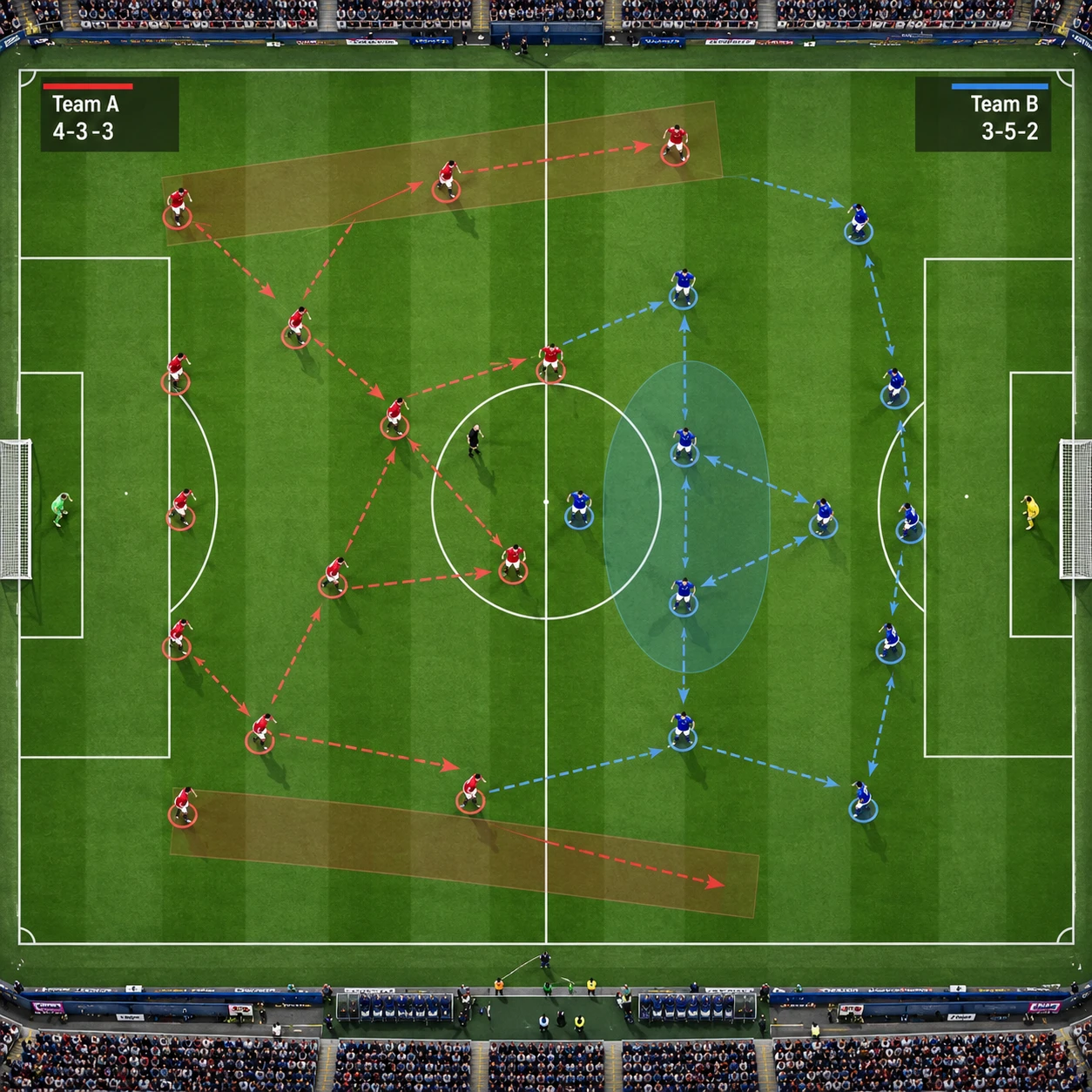
Football tactics shape how a team attacks, defends, and responds to an opponent. Once you know what to look for, formations and strategies make live matches easier to follow: a defender stepping forward, a winger staying wide, or a sudden press can all signal a change in the plan.
This guide explains the basics without assuming you know the jargon. Use it while watching a match or reading football news to understand not only who is on the pitch, but how the team is trying to control the game.
What Football Tactics Mean
Football tactics are the decisions and patterns a team uses to pursue a match goal, such as keeping possession, creating chances, or protecting a lead. A formation is the starting arrangement of players; tactics describe how those players behave in different situations.
For example, two teams might both line up in a 4-3-3. One may press high and attack quickly after winning the ball, while the other keeps a compact defensive shape and builds patiently from the back. The formation gives you a rough map. The tactics explain how the team uses that map.
Coaches plan around their players’ strengths, the opponent’s weaknesses, and the match context. A team facing a strong attack may defend deeper and leave fewer spaces between its lines. When it wins possession, it might launch a counterattack before the opposition can recover. These choices can shift during a match, so the pre-match formation is only a starting clue.
How to Read a Formation
A football formation is written as a sequence of numbers that shows how outfield players are arranged from defence to attack. The goalkeeper is not included, so a 4-3-3 usually means four defenders, three midfielders, and three forwards.
Read the numbers from the back of the team towards the front. A 4-4-2, for instance, has four defenders, four midfielders, and two forwards. The numbers describe broad lines rather than exact positions: a midfielder may play centrally or out wide, and forwards can drop deeper or drift to the wings.
Player roles give the shape its character. Full-backs often support attacks from the sides, while centre-backs protect the space in front of goal. Central midfielders may help win the ball, connect defence to attack, or create chances. Wingers provide width, and a striker leads the attack, though these roles overlap.
The listed shape can also change in play. A full-back pushing forward may leave a back line that looks like three defenders, while a winger dropping back can help form a defensive line of five. When watching, look at where players settle when the team has the ball and where they regroup when it loses possession.
Common Formations and Their Strengths
The 4-3-3, 4-4-2, and 3-5-2 are common formations, each offering a different balance of width, midfield presence, and defensive cover. None guarantees success; the trade-off depends on the players and how the team uses the shape.
- 4-3-3: Three forwards can stretch the defence, while three midfielders support both attack and defence. It can create wide options and encourage pressing high up the pitch. The risk is that the wide forwards and full-backs may leave space behind them if the team loses the ball.
- 4-4-2: Two banks of four can make a straightforward, compact defensive shape, with two forwards available for passes or counterattacks. The team may find it harder to control central midfield against an opponent using three central players.
- 3-5-2: Three centre-backs provide a central defensive base, while wing-backs can push forward to supply width. Two strikers offer options close to goal. The shape depends heavily on the wing-backs’ work: if they are pinned back, the team may struggle to advance; if they push up, space can open behind them.
These labels are shorthand, not a full tactical report. A 3-5-2 can look like a five-player defence without the ball, then become a 3-3-4 when the wing-backs attack. Check how the team shifts between phases before deciding what formation you are seeing.
Attacking Strategies
Attacking strategies describe how a team moves the ball and creates chances. Common tools include patient build-up play, using width to stretch a defence, and counterattacking into space after winning possession.
In build-up play, defenders and midfielders work together to move the ball out from the back. A goalkeeper may pass to a centre-back, who looks for a midfielder positioned between the opponent’s lines. If the route through the middle is blocked, the team can switch play to the other side. Watch for players checking towards the ball, making forward runs, and creating passing angles.
Width forces defenders to cover more of the pitch. Wingers can hold near the touchline, giving teammates room to pass through the centre. Full-backs may overlap them, or move inside to help the midfield. These movements can create a spare player, but a missed pass or turnover may expose the space left behind.
A counterattack aims to exploit the opponent’s open shape immediately after the ball changes hands. The first pass often goes forward, and supporting players sprint into open channels. When watching, note how many players join the break and whether the team chooses a quick attack or slows down to keep possession. The choice often reveals how much risk it is willing to take.
Defensive Strategies and Pressing
A defensive strategy sets out how a team protects its goal and limits the opponent’s space. Teams use a defensive shape to stay organised, while pressing tries to put pressure on the player with the ball and disrupt the opposition’s next pass.
Some teams press high, closing down defenders and the goalkeeper near the opponent’s goal. Others defend in a lower block, staying closer to their own penalty area and trying to keep the central spaces crowded. A mid-block sits between those approaches. Each has a cost: pressing high can win the ball in dangerous areas, but it can also leave room behind the defence; sitting deep reduces space near goal, but gives the opponent more time on the ball.
Pressing works best as a coordinated action. One player may approach the ball carrier while teammates block nearby passing options or move up together. If one player presses alone, opponents can pass around them. Look for a trigger, such as a slow pass, a receiver facing their own goal, or a defender receiving the ball near the touchline.
A compact team keeps its lines close so opponents have fewer easy passes between defence and midfield. That does not mean every player stays still: defenders may step forward, midfielders track runners, and forwards help guide play away from the centre. A useful viewing question is, “Where is the team trying to make the opponent play?”
How Tactics Change During a Match
Teams adjust tactics during a match in response to the score, the opponent, player fatigue, and the chances being created. Substitutions and changes in positioning can alter the team’s formation or its approach without a formal switch in shape.
A team chasing a goal might bring on an attacker, push its full-backs higher, or move a midfielder closer to the forwards. That can add pressure in the final third, but it may leave fewer players ready to defend a counterattack. A team protecting a lead may add a defender, hold a deeper line, or keep possession to reduce the opponent’s opportunities.
Opposition changes matter too. If an opponent is finding space down one flank, a coach might ask a winger to track back or shift the midfield across. If the centre is crowded, the team may try wider passes. These adjustments can happen gradually, so compare player positions before and after a substitution or a spell of pressure.
For live football viewers, focus on three things: where the team wins the ball, how quickly it attacks afterward, and whether its defensive lines move together. Those clues often reveal more than the formation shown on a graphic. They also add useful context to football news and match coverage, where a tactical change can explain why the balance of a game shifted.
Football Tactics FAQs
These quick answers clarify the basic terms used to describe football formations and strategies. They can help you make sense of tactical discussion during a match or in post-game coverage.
What does a formation such as 4-3-3 mean?
A 4-3-3 usually means four defenders, three midfielders, and three forwards, with the goalkeeper left out of the numbers. It shows the team’s broad positional arrangement, not exactly how every player moves.
What is the difference between a formation and a tactic?
A formation describes where players are arranged on the pitch. Tactics describe how the team plays, including how it builds attacks, presses, defends, and adapts to the opponent.
What is pressing in football?
Pressing is a coordinated attempt to pressure the opponent in possession and limit their passing options. Teams may press high near the opponent’s goal or wait in a more compact defensive shape.
Can a team change formation during a match?
Yes. A coach can change formation with a substitution or by asking players to take different positions. Teams can also shift shape naturally between attacking and defending phases, even without a substitution.