



Match Analysis: Breaking Down the Weekend's Biggest Games
Not every weekend delivers the same weight. Some rounds of fixtures feel routine — three points here, a dull draw there. But this weekend was different. Title implications, relegation six-pointers, and a couple of managerial gambles that paid off (or didn't) made for a genuinely compelling set of matches. Here's the full breakdown.
Why These Games Mattered This Weekend
The significance of this weekend's fixtures goes beyond three points — several results carry direct consequences for the title race, European qualification spots, and the bottom of the table where the margin for error has all but vanished.
At the top end, the gap between first and third entering the weekend was just four points. A slip from the league leaders while a chasing side won would have reset the entire conversation. Meanwhile, two clubs in the bottom five faced each other in what was effectively a survival match — the kind of game where a single goal can feel worth ten points come May.
Derbies and rivalry fixtures added emotional heat on top of the competitive stakes. When local bragging rights overlap with league positioning, both managers and players tend to approach the game differently — more cautious in some phases, more reckless in others. That tension produced some of the weekend's most interesting tactical decisions.
Tactical Breakdown: How Each Side Set Up
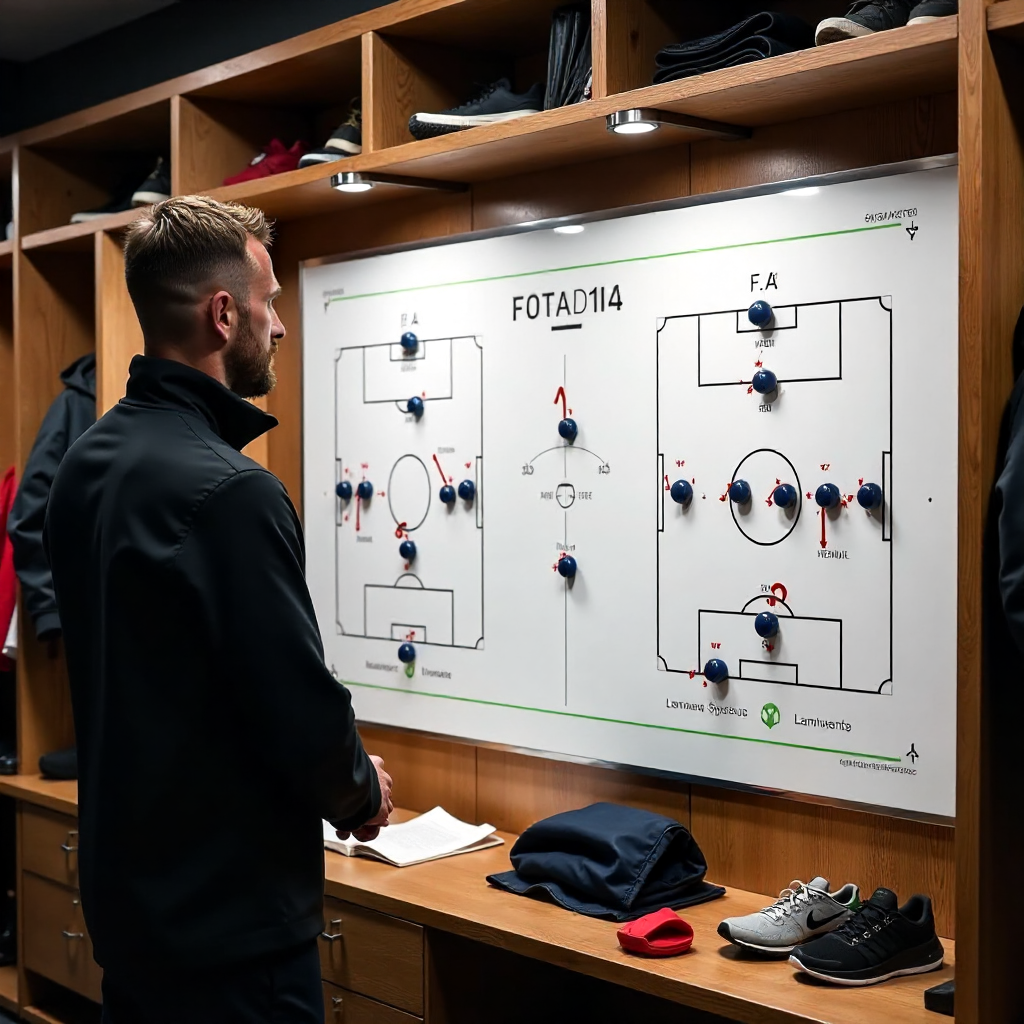
The dominant structural trend across the weekend's top matches was a preference for defensive compactness over expansive pressing — a notable shift from the high-press orthodoxy that defined the past few seasons.
Several sides lined up in a 5-4-1 defensive block, particularly away from home, prioritizing shape over territory. The logic is sound: when you're playing a side with superior technical quality, surrendering the ball and defending in two banks of four or five limits the spaces that hurt you most. The risk, of course, is that you create almost nothing going forward and need set pieces or transitions to score.
The contrast came from the teams who stuck with a 4-3-3 and aggressive pressing triggers. When the press worked — when the trigger was the opposing centre-back receiving under pressure — it generated turnovers in dangerous areas and led directly to goal-scoring opportunities. When it didn't, when the press was beaten with a simple third-man run, the gaps in behind were enormous.
One manager's decision to switch from a flat back four to a back three at half-time deserves particular attention. The adjustment tightened the wide channels that had been exploited repeatedly in the first half and gave the side an extra body in midfield transitions. It was reactive, yes — but it worked.
Key Moments That Decided the Outcomes
Matches are rarely decided by a single moment, but there are almost always two or three phases where the game's direction changed — and those phases tell you more than the final scoreline.
In the standout fixture of the weekend, the turning point came not from a goal but from a substitution. A withdrawn attacking midfielder in the 58th minute signalled a tactical retreat that the opposition immediately sensed and exploited. Within seven minutes, the pressure had produced a penalty. The crowd shifted. The momentum never came back.
Elsewhere, a red card in first-half stoppage time distorted what had been a genuinely even contest. Ten-man football changes everything — the defensive shape, the pressing intensity, the substitution logic. The team that went down to ten men defended with remarkable organisation for over 40 minutes, but the numerical disadvantage eventually told in the final quarter of the game.
Set pieces proved decisive in at least two of the weekend's results. Dead-ball situations — corners, free kicks around the box — continue to be undervalued in casual analysis but are consistently among the highest-probability routes to goal at the top level. Both goals came from well-designed routines with clear blocking patterns and a runner arriving late to the near post.
Standout Performers Across the Weekend
Individual brilliance doesn't always show up in the goal or assist column, and this weekend's best performances were spread across positions and roles.
The most complete attacking display came from a wide forward who combined directness with intelligence — beating his man with pace, but also making the right decision when to cut inside versus when to play the overlap. He finished with two key passes, a goal, and won four duels. That combination of creativity and physicality is rare.
Defensively, a holding midfielder put in the kind of performance that rarely gets highlighted in post-match coverage. He made nine ball recoveries, broke up three promising attacks before they developed, and — critically — managed his own positioning so well that the opposition's most dangerous player barely touched the ball in the second half. That's game management through positioning, not just tackling.
Worth mentioning: a goalkeeper whose distribution was a genuine weapon. Three long kicks that bypassed the opposition's midfield press and found a teammate in space. In a game where the press was a central tactical element, that ability to play through it from the back was significant.
What the Stats Tell Us (and What They Miss)
Match data adds important context to what you see on the pitch — but it requires careful reading. Expected goals (xG) is the most useful single metric for understanding whether a result reflects the run of play, but it has real limitations.
In one of the weekend's matches, the losing side actually posted a higher xG figure. On the surface, that suggests an unlucky defeat. Look closer, though, and most of their xG came from low-quality long-range attempts that inflated the number without representing genuine danger. The winning side's chances were fewer but cleaner — high-probability situations inside the box from well-constructed attacks.
Possession share told a similarly incomplete story in the relegation battle. The side with 62% possession created almost nothing from it — their ball movement was lateral, slow, and predictable. The side with 38% possession was far more direct and generated more shots on target. Possession without purpose is a tactical dead end, and the stats don't automatically flag that distinction.
Pressing intensity metrics (PPDA — passes allowed per defensive action) are worth tracking across the season. This weekend's high-press sides averaged a PPDA of around 8-9, meaning they forced a defensive action roughly every eight opposition passes. That's aggressive. The question is whether they can sustain it over 90 minutes — and this weekend suggested some can't.
How Results Shift the League Picture
This weekend's outcomes have meaningfully reshuffled the table in multiple directions. At the top, the points gap between first and second has narrowed to two — the tightest it's been in six weeks.
The European picture is genuinely congested now. Four clubs are separated by three points in the race for the final continental spot. Every fixture from here carries amplified weight because the teams involved are playing each other with increasing frequency as the calendar tightens.
At the bottom, the results were brutal for one club in particular. A defeat while two direct rivals won means they now sit four points from safety with a difficult run of fixtures ahead. Mathematically still very much alive, but the margin for error is essentially gone. Their next two games — both at home — have taken on the character of must-win matches.
Title races and relegation battles both tend to be decided not by the biggest games but by the ones that look manageable on paper and aren't. That's worth keeping in mind as the next round of fixtures approaches.
Where to Watch Replays and Upcoming Fixtures
If you missed any of the weekend's action, full match replays are available through the major football streaming platforms — most broadcast rights holders make replays accessible within a few hours of the final whistle. Check your subscription service's on-demand library, as most platforms now archive full matches for at least 30 days.
For those who want highlights rather than full replays, official club YouTube channels typically publish extended highlight packages within an hour of the final whistle. These are free, legally available, and cover the key moments in around 10-12 minutes — useful if you want the story of the game without the full commitment.
The next midweek round of fixtures is already shaping up to be significant. Several of the clubs involved in this weekend's results face each other again within days, which means tactical adjustments and rotation decisions will be made under time pressure. That context makes the upcoming games worth watching closely — managers rarely get long to fix what went wrong or build on what worked.
Stay across the schedule, because the league picture can shift dramatically in a single midweek round. The next set of fixtures could be the most consequential of the season so far.
Frequently Asked Questions
What were the biggest results from this weekend's football?
The most significant results involved matches with direct title, European, or relegation implications — including a narrow win at the top of the table and a crucial defeat in the bottom five. The full breakdown is covered in the sections above.
Which players stood out most across the weekend's top games?
A wide forward's attacking display and a holding midfielder's defensive intelligence were the most complete individual performances. A goalkeeper's distribution also proved tactically decisive in one fixture.
How do these results affect the current league standings?
The title race has tightened to a two-point gap. The European qualification spots are now separated by just three points across four clubs. In the relegation zone, one side's position has become significantly more precarious after rivals also picked up points.
Where can I watch replays of this weekend's matches?
Full replays are available on major football streaming platforms within hours of the final whistle. Official club channels on YouTube also publish free highlight packages covering the key moments from each game.
What tactical trends were most noticeable across the weekend's games?
A shift toward defensive compactness over high pressing was the clearest trend. Set pieces proved decisive in multiple results, and the contrast between purposeful and purposeless possession was a recurring theme across the weekend's fixtures.